Anusha Year 13
Bella Venezia, una favola dal Veneto, fa parte della collezione di 200 storie folcloristiche compilate da Italo Calvino nel 1956 e intitolata ‘Fiabe Italiane’. Ispirandosi ai Fratelli Grimm, Calvino ha cercato di rilavorare le favole provenienti da tutte le regioni del paese in un’antologia nazionale con l’obiettivo di creare unità nella nazione e rafforzare il patrimonio culturale. Tuttavia, tale impegno era veramente delicato dato che Calvino voleva assicurare la coerenza delle favole in termini stilistici e allo stesso tempo preservare l’individualità regionale di ognuna.
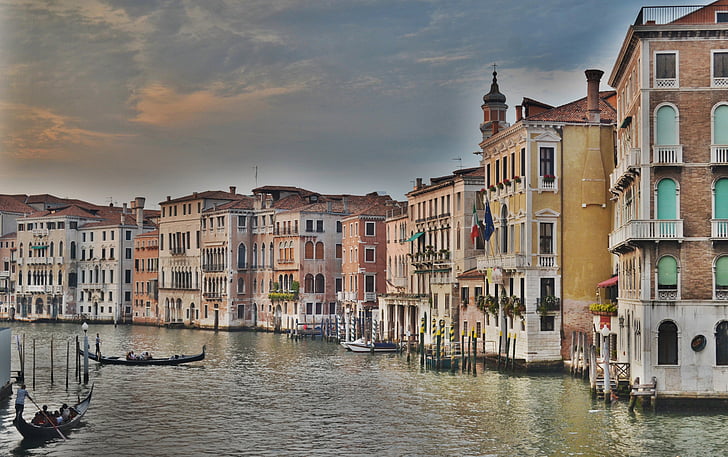
Ho scelto di tradurre Bella Venezia perché pensavo che fosse un bell’esempio di una favola in cui ci si mantiene una forte presenza dell’individualità regionale pur essendo modificata da Calvino. Benché la trama sia simile a quella presentata nella nota favola di Biancaneve, ho trovato veramente affascinante il modo in cui si possano ancora osservare elementi specifici che sono legati alla cultura della regione del Veneto come la riva al mare, la quale fa riferimento alla natura marittima della regione, e soprattutto la città di Venezia. Inoltre, ho notato che Calvino ha scelto di cambiare i personaggi tradizionali dei dodici gnomi in dodici ladri, in quanto affermava che, secondo lui, i ladri sembravano di essere più ‘italiani’ degli gnomi. In tal senso, questa storia mi ha fatto riflettere sulla natura più generale delle favole e sul loro ruolo come mezzo per rappresentare la cultura del luogo da cui provengono. Trovo bello che i fili della trama nelle favole, i quali rimangono costanti e familiari tra le comunità, sono arricchiti dalle generazioni che le tramandano con dettagli legati alla propria eredità e identità. Per questo direi che l’atto del tradurre dovrebbe essere compiuto in modo delicato, come strumento per onorare l’identità incarnata nella favola originale, così che la traduzione la metta in risalto nei confronti di un pubblico più ampio in un mondo più moderno e, di conseguenza, preservi tale eredità per le generazioni future.
Translation:
There once was a mother and daughter who owned an elegant inn where the King and princes travelling by would stop on their journey. The innkeeper was called Bella Venezia and would strike up small conversation whilst the travellers sat at the table. ‘What town do you come from?’
‘From Milan.’
‘And have you ever seen a woman more beautiful than me, there in Milan?’
‘No, I have never seen anyone prettier than you.’
Then when settling the bill, Bella Venezia would say, ‘It should be ten lire, but you need only pay me five’, for those who had told her that they hadn’t seen a more beautiful woman would always pay half.
One day, the innkeeper was asking a traveller the usual question when her daughter passed by the room. And the traveller replied, ‘I have indeed.’
‘And who would that be?’
‘Your daughter’
That time, when settling the bill, Bella Venezia said, ‘It should be eight lire, but you must pay me sixteen.’
That evening, the mistress called in the scullery boy ordering, ‘Go to the seashore, build a cabin with only a tiny little window, and lock my daughter inside.’
So, upon such orders, Bella Venezia’s daughter would be locked up night and day in that hut by the seashore, listening to the sounds of the waves but unable to see anyone except the scullery boy who came every day to bring her bread and water. But despite being locked up in there, the girl became more beautiful with every day.
A foreigner passing by the seashore on horse saw this hut, all boarded up and little, and approached it. He peeked through the little window and made out through the darkness a beautiful face of a maiden, the most beautiful he had ever seen.
Slightly frightened, he jolted his horse to gallop off.
That evening, he stopped off at the inn of Bella Venezia.
‘What town do you come from?’ The innkeeper asked him.
‘From Rome’
‘Have you ever seen a woman more beautiful than me?’
‘Why I have indeed’, said the stranger.
‘And where, might I ask?’
‘Shut up in a little hut down by the seashore.’
‘Here’s the bill: it’s ten lire but I want you to pay me thirty.’
That evening, Bella Venezia asked the scullery boy, ‘Listen, would you like to marry me?’
Marrying the innkeeper? The scullery boy could hardly believe his ears.
‘If you want to marry me, you must take my daughter into the forest and kill her. And if you bring me back her eyes and a bottle full of her blood, then I will marry you.’
The scullery boy wanted to marry the innkeeper but could not bring himself to kill such a girl, so pretty and lovely. And so, he took the girl to forest and left her there. In order to bring the eyes and blood promised back to Bella Venezia, he killed a little lamb and with its innocent blood, the innkeeper married him.
The girl, all alone in the forest, screamed and cried, but no one heard her. As the evening drew near, she saw a candlelight ahead: she approached it but upon hearing the speaking of people, she hid behind a tree, full of fear.
It was a rocky and deserted place, and twelve thieves had come to a halt before a big white boulder. One of them said, ‘Open up, you abandoned place!’, and the white boulder swung open like an entrance door to its insides all illuminated inside like a palace. The twelve thieves entered, and the last one said, ‘Now close, abandoned place!’, and the boulder closed in on itself. The girl hidden behind the tree stayed still and waited. After a while, a voice from inside said, ‘Open up, abandoned place!’. The door swung open, and the thieves all filed out in line formation, up unto the last who commanded, ‘Close, abandoned place!’
Inside there was a table laid for twelve, with twelve plates, twelve bread rolls and twelve wine bottles. There in the kitchen was a spit along with twelve chickens to roast. The girl tidied up the place, remaking the twelve beds and roasting up the twelve chickens. As she was famished, she ate a wing from each chicken, took a bite from each bread roll and a had a sip from every bottle of wine. When she heard the thieves returning, she hid under the bed. Upon finding everything all tidy, their beds made, and their chicken roasted, the twelve bandits did not know what to even think. Then they noticed that a wing was missing from every chicken, a bite from every bread roll and a sip from every bottle, and concluded, ‘Somebody must have come in here’. They decided that the next day, one of them would stay behind to keep guard.
It was the smallest of the thieves who stayed back, but he kept guard from outside whilst the girl got out from under the bed in the meanwhile. She tidied up everything, ate the wings off the twelve chickens, the twelve bread rolls and drunk twelve sips of wine.
‘Oh, you’re good for nothing!’ remarked the chief thief when returning to see the house had been visited again and he quickly replaced the little thief with another. But this thief also kept guard from outside whilst the girl was inside, and so on. Calling each other stupid, every single thief tried to keep a strict guard for eleven days straight, but they did not find the girl.
On the twelfth day, the chief decided to stand guard and, instead of doing so outside, he stayed inside and saw the girl get out from under the bed. Grabbing her by the arm, he said, ‘Don’t be afraid, now that you’re here, you can stay. We will treat you as we would a sister.’
Thus, the girl stayed with the thieves and kept their house nice and clean, with them bringing her back jewels, gold pieces, rings and earrings every night.
The smallest thief would love to dress up as a grand nobleman when committing robberies and would stop at the best inns. Hence, one day he went to Bella Venezia for an evening’s dinner.
‘Where do you come from?’ Asked the innkeeper.
‘From the depths of the forest.’
‘And have you ever seen a woman more beautiful than me?’
‘I certainly have’, replied the thief.
‘And who is she?’
‘A girl that we have with us’
Therefore, Bella Venezia knew that her daughter was still alive.
Every day, an old woman would come to the inn asking for alms, and this old woman was a witch. Bella Venezia promised her half of her wealth if she managed to find her daughter and kill her.
One day, whilst the thieves were away, the girl was singing by the window when an old woman passed by and remarked, ‘Brooches for sale! Brooches for sale! You, beautiful girl, will you take me up on this? I’ll show you a nice brooch that would look wonderful in your hair.’
The girl accepted the offer and the old woman, pretending to show her just how nice the brooch looked in her hair, pierced it into her skull. The girl died.
When the thieves returned and found her dead, they all burst into tears despite the tough hearts that they held. They picked a large tree with a hollow trunk and buried her into the trunk.
Now the King’s son was going out hunting when he heard the dogs barking and chased up to reach them. They were all over the tree, scratching away at the trunk with their paws. The king’s son looked inside and found a beautiful maiden who lay dead.
‘Oh, if only you were alive, I would marry you’, he told her, ‘But even though you are dead, I still cannot tear myself away from you.’ He sounded his hunting horn, gathered his hunters and had her brought to the royal palace. Without informing the Queen, his mother, he locked her in a room and spent the whole day there, admiring her.
Suspicious, his mother burst into the room. ‘Ah! So that’s why you did not want to leave! But she is dead! Surely you cannot be interested in her?’
‘Either dead or not, I can’t possibly live away from her!’
‘Well then at least comb her hair!’ said the Queen and sent for the royal hairdresser. He came in and started to comb the girl’s hair when his comb broke. He picked up another comb but that one broke too. As such, one after the other, seven combs broke. ‘But what does this girl have in her head?’, asked the royal hairdresser. ‘Let me have a look at it.’ He felt the head of the pin which was attached to the brooch. Slowly and ever so gently, he pulled the pin, and as he did so, colour came to the maiden’s face. Opening her eyes and drawing her breath, she remarked ‘Oh!’ and stood up.
And so, the wedding was celebrated. Tables were also set up in the streets for celebrations. Whoever who wanted to eat ate, and those who did not, didn’t.

 The Linguist NLCS