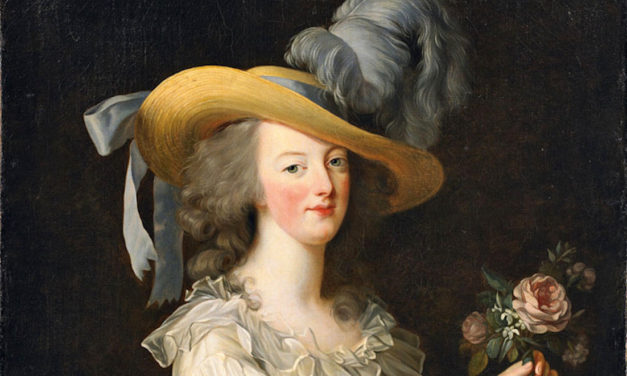
By Anya, Year 12
In this piece, Anya debunks the myth of Marie Antoinette and the “Let them eat cake” story, and contextualises the events of the French revolution.
L’expression « Qu’ils mangent de la brioche » est un dicton très bien connu dans le monde entier. Néanmoins, ce que la plupart des personnes ne savent pas, c’est que cette phrase n’est pas une citation exacte. Il est beaucoup plus probable que la citation ait été inventée, et elle est faussement attribuée à Marie-Antoinette.
Marie-Antoinette était la dernière reine française de l’Ancien Régime, qui est le terme utilisé afin de décrire la période historique entre 1589 et 1791, avant la Révolution française. Le mari de Marie-Antoinette était le roi Louis XVI, et comme son mari, elle a aussi connu le même destin ; en 1793 elle et son mari sont morts guillotinés. Mais quel est l’histoire de cette citation infâme ?
L’histoire raconte qu’on a dit à la reine que les paysans français mouraient de faim. En réponse à cela, elle a prétendument déclaré « Qu’ils mangent la brioche ». Cette phrase illustre à quel point elle était déconnectée de la réalité. La population française n’avait ni nourriture ni argent, et la phrase montre qu’elle ne comprenait pas la gravité de la situation. Mais, de nombreuses preuves suggèrent que la citation est fausse.
Premièrement, la traduction exacte en anglais de cette phrase n’est pas « Let them eat cake » mais « Let them eat brioche ». L’image qui est produite quand la plupart des anglophones pensent à cette expression est celle d’un gâteau, mais une brioche est plus appropriée dans ce cas.
Ce qui est intéressant, c’est que la première fois que la phrase a été écrite était par le philosophe politique Jean-Jacques Rousseau. En 1767, dans son livre Les Confessions, il attribue la citation à « une grande princesse ». Il a écrit : « d’une grande Princesse à qui l’on disait que les paysans n’avaient pas de pain, et qui répondit : Qu’ils mangent de la brioche » Cependant, Marie Antoinette n’avait que 12 ans à l’époque ; donc, il est très peu probable que Rousseau faisait référence à elle.
Ce qui est beaucoup plus probable c’est que la situation que Rousseau a décrite était une situation que la société française pouvait identifier. Le contexte de la situation racontée par Rousseau s’accorde bien avec la situation pendant la Révolution française, quand la monarchie ne pouvait pas s’adapter aux conditions auxquelles la société française était confrontée. Par conséquent, le mythe de « Qu’ils mangent la brioche » est né.
English translation:
The expression “Let them eat cake” is a very well-known phrase around the world. However, what most people do not know is that this phrase is not an accurate quotation. It is far more likely that the quotation was invented and is wrongly attributed to Marie-Antoinette.
Marie-Antoinette was the last French queen from the “Ancien Régime” (the Ancient Regime), which is the term used to describe the period of history between 1589 and 1791, just around the time of the French Revolution. Marie-Antoinette’s husband was the king Louis XVI, and just like her husband, she too met the same fate; in 1793 her and her husband were killed at the guillotine. But what is the history of this infamous phrase?
The story goes that the queen was told that the peasants in France were starving to death. In response to this, she supposedly replied with “Let them eat cake”. This phrase illustrates just how out of touch she was with reality. The French population did not have food nor money, and the quote shows that she did not understand the gravity of the situation. However, lots of evidence suggests that this quotation is false.
Firstly, the exact translation in English is not “Let them eat cake”, but rather “Let them eat brioche.” The image produced by most anglophones when they think of this expression is of a cake, but a brioche is more appropriate in this example.
What is interesting, is that the first time that this quotation was written down was by the political philosopher Jean-Jacques Rousseau. In 1767, in his book Confessions, he attributes the quotation to “a great princess”. He wrote of “a great princess who was told that the peasants had no bread, and who responded: Let them eat brioche.” However, Marie-Antoinette was only 12 at the time, thus it is highly unlikely that Rousseau was referring to her.
What is much more likely is that the situation that Rousseau described was one which French society could relate to. The context of the situation told by Rousseau fits with the situation during the French Revolution, where the monarchy could not relate to the conditions that French society was facing. Thus, the myth of “Let them eat cake” was born.

 The Linguist NLCS