Sona P
Ogni anno, nella notte del 5 gennaio, i bambini italiani aspettano la visita della Befana. Proveniente da una tradizione folcloristica che risale a secoli fa, la Befana è spesso rappresentata come una vecchia donna vestita con abiti rattoppati, che vola su una scopa, e porta un sacco di doni. Sebbene il suo aspetto ricordi quello di una strega, il suo carattere è caldo e gentile, incarnando la generosità delle celebrazioni dell’Epifania del 6 gennaio, che segnano la visita dei Re Magi.
Le origini della Befana sono strettamente legate alla tradizione cristiana. Secondo la storia più famosa, i Re Magi invitarono una vecchia a unirsi a loro nella ricerca del neonato Gesù. In un primo momento rifiutò, sostenendo di avere troppe faccende da sbrigare in casa. In seguito, pentita della sua decisione, partì alla ricerca del bambino portando con sé un cesto di dolci e doni. Poiché non riuscì a trovarlo, iniziò a distribuire regali a tutti i bambini che incontrava, sperando che uno di loro potesse essere il Cristo.
La celebrazione moderna è un’allegra combinazione di folclore e festa. Nella notte del 5 gennaio, i bambini appendono delle calze accanto al camino o lasciano fuori le scarpe, affinché la Befana le riempia di dolci, frutta o piccoli giocattoli. I bambini che non si sono comportati bene ricevono spesso carbone – tradizionalmente vero carbone, anche se oggi si tratta per lo più di una caramella zuccherata nera che lo imita. Molte famiglie preparano anche qualcosa per la Befana stessa, come un bicchiere di vino e un piatto di biscotti, dopo la sua lunga notte di viaggio.
Le festività pubbliche sono molto diffuse, soprattutto in città come Roma, dove Piazza Navona ospitava uno dei più celebri mercatini della Befana, con bancarelle di regali, giocattoli, dolci tradizionali e spettacoli. In tutta Italia, processioni, fiere e rievocazioni mantengono viva questa tradizione.
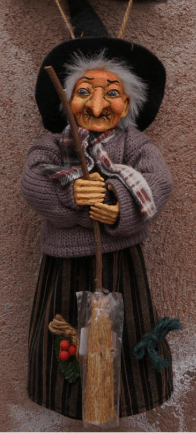
Every year on the night of January 5th, Italian children await La Befana’s visit. Coming from centuries-old folklore, La Befana is often depicted as an old woman dressed in patched clothing, flying on a broomstick and carrying a sack of gifts. Although she resembles a witch in appearance, her legend is warm and benevolent, conveying the generosity at the heart of the Epiphany celebrations on January 6th, which mark the visit of the Three Wise Men.
The origins of La Befana are intertwined with Christian tradition. According to the most widespread story, the Three Wise Men invited an old woman to accompany them as they searched for the newborn Jesus. She initially refused, claiming she had too much housework. Later, regretting her decision, she set out to find the child, bringing with her a basket of sweets and gifts. Unable to locate him, she began to give the presents to every child she encountered, hoping that one of them might be Christ.
The modern celebration is a fun mixture of folklore and festivity. On the night of January 5th, children hang stockings by the fireplace or leave out shoes, waiting for La Befana to fill them with dolci (sweets), fruit, or small toys. Those who have misbehaved might receive carbone, which is traditionally charcoal, although nowadays it is often a sugary black sweet which imitates it. Many families also prepare a small offering for La Befana herself, such as a glass of wine and a plate of biscuits, after her long night of travelling.
Public festivities are widespread, especially in cities like Rome, where the Piazza Navona once hosted one of the most famous Befana markets, selling gifts, toys, and traditional treats, and putting on performances. Across Italy, processions, street fairs, and reenactments keep the tradition alive.

 The Linguist NLCS